


Grief Counseling in Denver and Surrounding Areas
You don’t have to navigate grief alone.
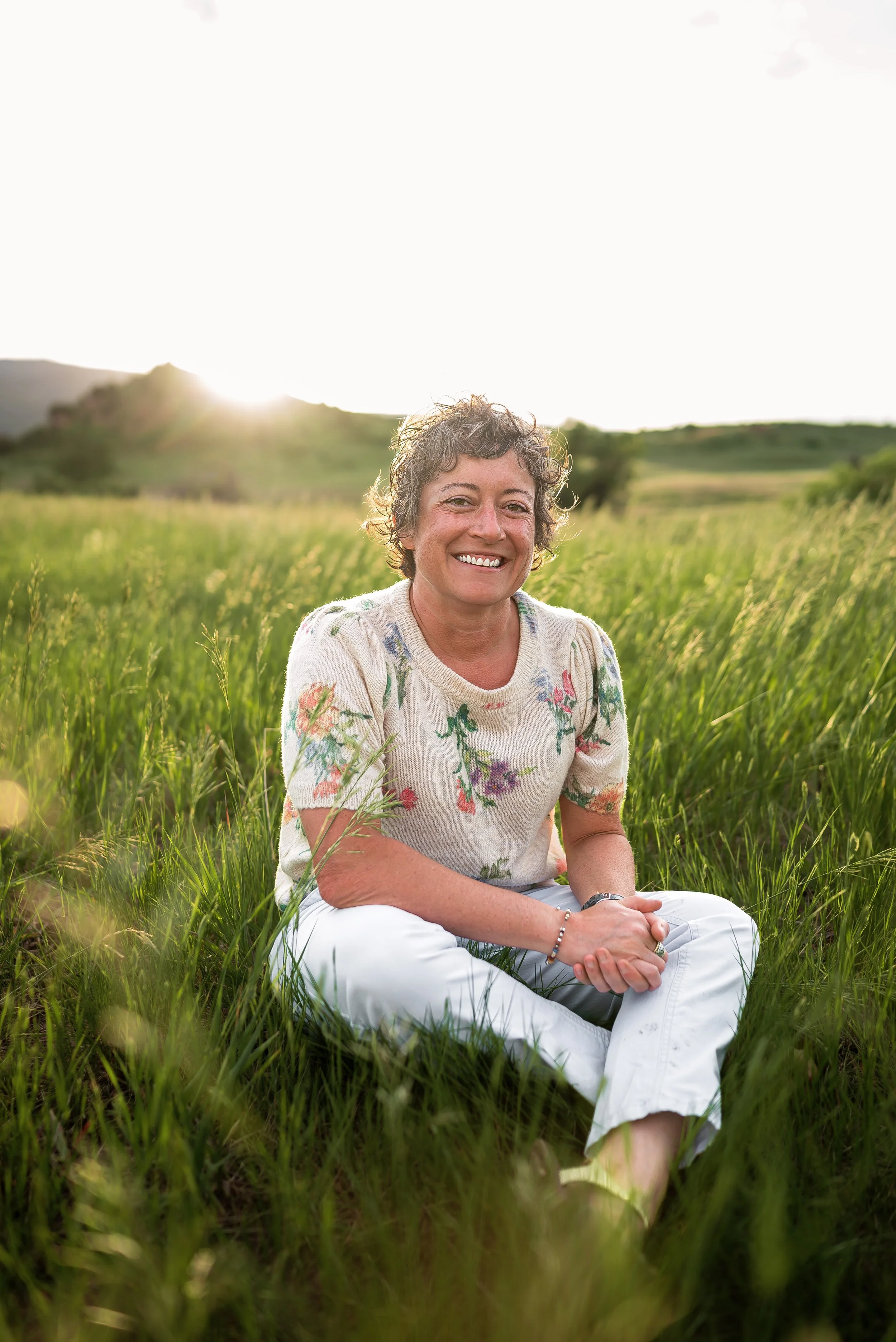
Welcome, I’m Andrea
Andrea, Therapist & Counselor, obtained her Masters of Social Work from the University of Denver with a certificate in Trauma, Response, and Recovery (August 2007).
As a Denver-based grief therapist, she specializes in supporting individuals navigating loss, bereavement, and life transitions with compassion and clinical expertise. Through personalized grief counseling in the Denver metro area, Andrea creates a safe and steady space for healing, renewal, and hope.
Grief Therapy for All of Colorado
"Though united in that we are grieving, we grieve differently. As each death has its own character, so too each grief over death has its own character, its own inscape. The dynamics of each person's sorrow must be allowed to work themselves out without judgment. I may find it strange that you should be tearful today, but dry-eyed yesterday when my tears were yesterday. But my sorrow is not your sorrow." (Wolterstorff, Nicholas. Lament for a Son. p. 56)
What grief therapy looks like with Andrea
Andrea draws on evidence-based approaches — including EMDR (Eye Movement Desensitization and Reprocessing) — to help process grief that has become stuck, traumatic, or overwhelming. She also uses a more Eastern talk therapy approach to grief counseling known as "Continuing Bonds" which encourages those who are grieving that there is no "last stage" of grief where a person "lets go" of their loved one. The theory of Continuing Bonds supports that the grief process is more circular than linear. While there are steps in the grief process, there is not a linear path.
The theory of Continuing Bonds also acknowledges that for some who are grieving, they may never "get beyond" their grief, and that is not "pathological".
"Self-help literature is still being published for bereaved people, telling them that they can and should reach a point where they do not feel grief. There are also writings in the contemporary professional/scholarly literature that are based on the idea that grief felt too strongly for too long is pathological and that there are things one can do to help a bereaved person to get beyond such grief. By contrast, there are cultures where the expectation is that people bereaved for certain losses will grieve very intensely for many years, if not a lifetime. Research and personal experience have led this author to believe that many Americans grieving major losses will not ever reach a time when they completely stop grieving. The expectation that they can and should reach the end of their grief is based on a misunderstanding of normal grieving and does them a disservice” (Klass, Silverman, and Nickman. Continuing Bonds: New Understandings of Grief, p. 45)
A few examples of losses that people seek counseling for:
Death of a family member, friend, pet, or loved one
Anticipatory grief
Pregnancy and infant loss
Loss of identity after a major life change
Disenfranchised grief.
"To speak of disenfranchisement in relation to bereavement and grief is to recognize that, in various spoken and unspoken ways, social and cultural communities may deny recognition, legitimation, or support to the grief people experience....Society must be fully prepared to recognize, legitimize, and support experiences of grief that an individual, for whatever reason, holds private and does not share."
(Doka, Kenneth. Disenfranchised Grief: New Directions, Challenges, and Strategies for Practice. p. 40)
Serving Clients Across Colorado
A Dwelling Place Counseling offers virtual grief therapy to clients across Colorado, from the Western Slope to the Front Range. Including the Denver metro area and surrounding communities such as Aurora, Highlands Ranch, Lakewood, Englewood, Centennial, Westminster, Littleton, and Arvada.
